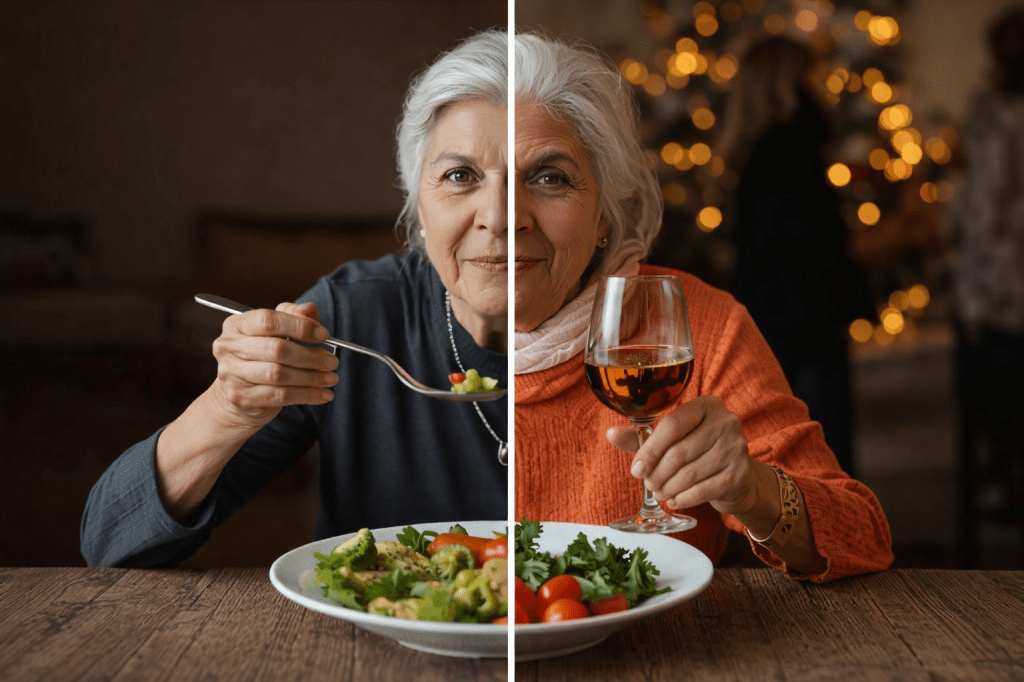
Good nutrition doesn’t have to be complicated. In fact, the most effective approach is often the one you can maintain consistently. The 80/20 rule offers a realistic way to support a healthy diet for seniors while still leaving room for enjoyment and flexibility.
This approach fits well with modern guidance around nutrition for older adults, emphasizing balance rather than rigid rules.
What Is the 80/20 Rule?
The 80/20 rule is simple:
- 80% of the time, you choose foods that nourish your body and support long-term health
- 20% of the time, you allow yourself flexibility for favorite foods, social meals, and special occasions
This structure works especially well for nutrition for elderly adults because it removes pressure and encourages consistency over perfection.
Why This Approach Works for Seniors
Strict or highly restrictive eating plans often lead to frustration and burnout. The 80/20 rule supports:
- Steadier energy throughout the day
- Better digestion and satisfaction
- A more positive relationship with food
It encourages a sustainable diet for seniors that fits everyday life—not just “ideal” circumstances.
What the “80%” Looks Like
The foundation of the 80% focuses on foods that provide nourishment and support strength, mobility, and overall health:
- Vegetables and fruits (fresh, frozen, or canned with minimal additives)
- Lean protein sources such as fish, poultry, eggs, beans, and yogurt
- Whole grains
- Healthy fats like olive oil, nuts, and seeds
This pattern supports a healthy diet for seniors and aligns well with evidence-based recommendations for healthy eating for seniors.
For some individuals, especially those managing time, mobility, or medical concerns, prepared meals for elderly adults or thoughtfully designed best meal plans for seniors can be practical tools to help meet nutrition needs.
What the “20%” Looks Like
The remaining 20% allows room for enjoyment and flexibility, such as:
- Favorite comfort foods
- Meals shared with family or friends
- Celebrations, holidays, or dining out
This balance helps make healthy eating for seniors feel realistic and enjoyable—rather than restrictive.
When Additional Support Can Help
Access to nutritious food isn’t always simple. Many older adults benefit from added support, including:
Community or faith-based elderly food assistance resources
Local or national elderly nutrition program services
Senior-focused meal initiatives and outreach programs
These services play an important role in strengthening senior nutrition program efforts and ensuring consistent access to nourishing meals.
Putting the 80/20 Rule into Practice
You don’t need to change everything at once. Small, steady steps can make a meaningful difference:
- Add one nutrient-rich food to your daily routine
- Swap one highly processed item for a whole-food alternative
- Use best meal plans for seniors as guidance, not strict rules
Over time, these habits support better nutrition for older adults without adding stress.
Final Thoughts
The 80/20 rule is a reminder that nutrition should support both your health and your quality of life. When balance and flexibility are part of the plan, healthy habits become easier to maintain over time.
Want Practical, Senior-Friendly Fitness Guidance?
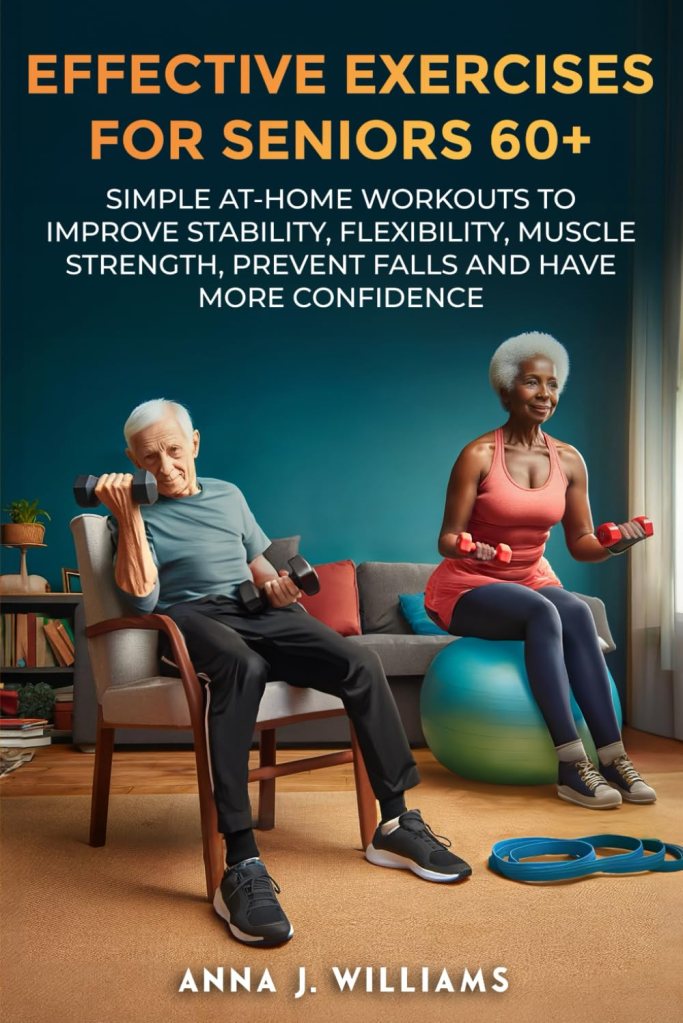
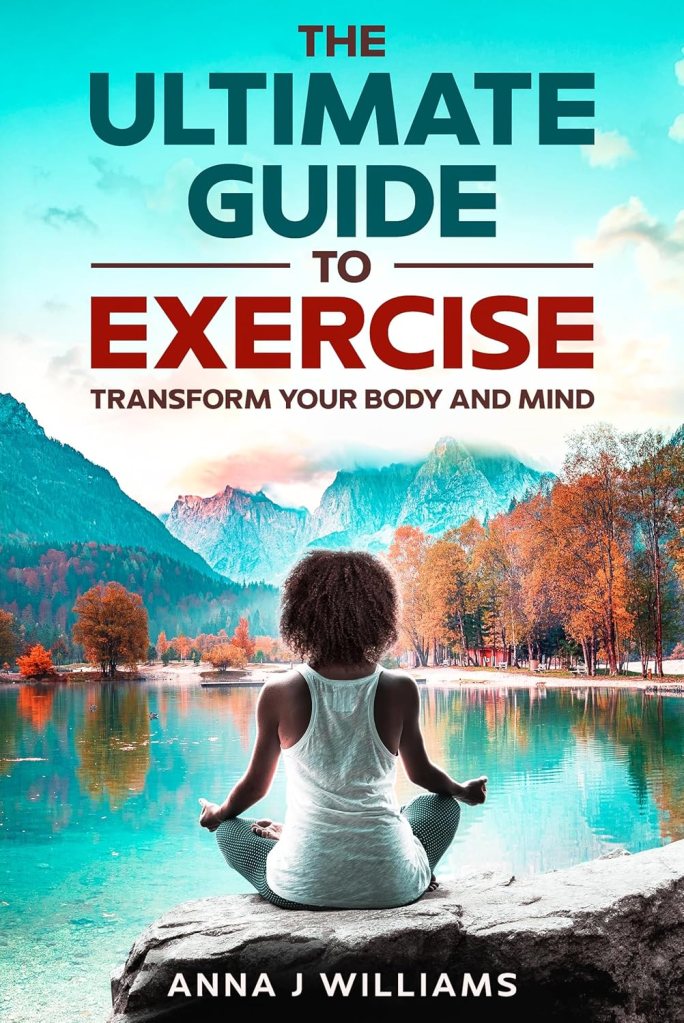
If you’re looking for simple, safe, and effective ways to stay strong, active, and independent after 60, my books are designed with you in mind.
This article is for educational purposes only and is not intended to replace medical advice. Always consult your healthcare provider before starting any new supplement.
 Healthyxpectations
Leave a comment